Various traditional healing practices globally often include the use of herbal medicines, meditative states, music, healing touch, and special diets. Modern Western medicine, on the other hand, focuses on treating particular symptoms.
However (a number of modern and historical Chinese sources contradict each other in terms of which plant parts correspond to certain traditional drug names such as mafen (麻蕡)), mahua (麻花), and mabo (麻勃), complicating the interpretation of their medical actions. Despite the fact that cannabis preparations have been extensively and consistently documented in Chinese bencao , materia medica, texts for ~1800 years, no English-language publications have systematically assessed the medicinal indications of cannabis in the Chinese bencao literature and historical changes in the plant parts used. All parts of the cannabis plant have been recorded in historical Chinese medical texts (including the achene (seed)), female inflorescence, leaf, and root, as well as the cortex of the stalk and the water used to process the stalk into fiber. Data sharing is not applicable to this article as no new data were generated or analyzed during this study. MNA and SS were involved in the study conception/design; MNA prepared the manuscript and interpreted the data; KH and MG were involved in drafting and revising the manuscript; KH, MNK, MG, and SS reviewed and edited the final draft of the manuscript.
Today, traditional medicine has become a global phenomenon; the demand is growing, with patients seeking greater agency and ownership of their health and well-being and seeking more holistic and THC vape pen market overview personalized health care. Many countries recognize traditional medicine as a valuable source of health care and have taken steps to integrate practices, products, and practitioners into their national systems. Traditional (Complementary and Integrative Medicine (TCIM) is used in 170 countries), according to a 2019 WHO report.
It was thought that cannabis could enable communication with the divine and trigger altered states of consciousness suitable for spiritual experiences or trance-like states. Furthermore, while specific information about its involvement in Mayan religious ceremonies and rituals is less documented than in some ancient cultures, cannabis may have had a significant role. Historical documents indicate that hashish was introduced to Egyptian society by “mystic Islamic travelers” from Syria during the 12th century AD , Ayyubid dynasty,. Regardless of its prohibition in numerous countries and the conflicts between state and federal laws in the United States, cannabis has significantly influenced human history. Incorporating cannabis into holistic treatment modalities that cater to the mind, body, and spirit, Ayurvedic medicine, African traditional healing, and Native American plant medicine focus on personalized therapies and ceremonial preparations that enhance therapeutic effectiveness.
Indigenous Peoples of the Americas: Cannabis in Healing and Spirituality
With Kampo’s increasing integration alongside Western medicine — there is an emergent acknowledgment of the critical necessity to examine the interactions between these two medical systems. Along with chemotherapy or radiotherapy, Kampo medicines are often employed by some Japanese doctors in the treatment of cancer patients. A recent study has revealed that a number of physicians in Japan prefer to use Kampo medicines in their everyday practice. In recent times, TCM has gradually received significant recognition as an alternative or complementary medicine in Western regions.

These ceremonies include Native American vision quests, Hindu festival celebrations, and Rastafarian religious sacraments that view cannabis as a sacred teacher facilitating communication with divine consciousness and ancestral spirits. Traditional teachings stress approaching cannabis with reverence (using it for specific therapeutic or spiritual purposes), and consuming quantities that enhance rather than impair consciousness and community connection, reflecting thousands of years of accumulated wisdom about optimal plant medicine use. These programs emphasize the sophistication of traditional knowledge systems, the importance of cultural context in understanding plant medicines, and the ongoing relevance of ancestral wisdom for contemporary cannabis use, research, and policy development throughout the United States. Traditional teachings consistently stress that cannabis should be approached with reverence (used with specific therapeutic or spiritual intentions), and consumed in quantities that enhance rather than impair consciousness and community connection. Ethical engagement involves seeking permission before participating in traditional ceremonies, acknowledging the source of traditional knowledge, and supporting indigenous communities’ rights to control access to their cultural heritage. Indigenous communities often restrict access to these ceremonial cannabis practices to specific age groups (gender roles), or spiritual initiations, ensuring that plant wisdom serves appropriate developmental purposes within cultural contexts that honor both individual growth and collective responsibility.
The utilization and investigation of natural products remain less than satisfactory. To alleviate the threat posed by severe illnesses and ensure the species’ survival, it is crucial to continually develop improved pharmaceuticals. The history of humanity also encompasses the evolution of medicines for the treatment and prevention of various ailments.
In the context of cannabis (several unique challenges relate to the translation of the plant parts used), as historical sources offer conflicting descriptions of different plant parts. Authentic editions of over 800 historical bencao texts are collected together in a set known as the Complete Ben Cao (本草全書 Ben Cao Quan Shu); a set of this compilation stored at Hong Kong Baptist University was used as a primary reference in this study. Thus, special attention was given to tracing the historical development of applications related to seizures, pain, and mental effects or mental illness, as these conditions have been the subject of extensive research in the context of cannabinoids such as CBD and Δ9-THC , Mechoulam et al., 2002; Devinsky et al., 2014,.
Trichomes Are the Key to Most Potent Cannabis Flowers
In addition (when you browse our shop), we automatically receive the Internet Protocol (IP) address of your computer. Another author — Bian Que, wrote about how a combination of cannabis and other herbs would bring patients to a tranquil state where they would be numb to pain, allowing surgeons to operate. Interestingly (these specifically mention taking seeds as pain relief), or in the case of Su Song, taking seeds alongside wine to treat the pain caused by broken bones. However — for now, it’s important to note that they are all uses we would today recognise as coming from the effects of CBD and THC. Once emperor Sheng Nung (2696–2737 BCE), now deceased, first recorded the use of cannabis in traditional Chinese medicine, around 4800 years ago—so it’s been used for quite some time.
Among anticancer drugs approved in the time frame of about 1940–2002, approximately 54% were derived natural products or drugs inspired from knowledge related to such. This shows how research using natural products has made a significant contribution in drug development 19,20. As a successful example of drug development from natural products, artemisinin and its analogs are presently in wide use for the anti-malaria treatment. From the past century, the high structural diversity of natural products have been realized from the perspective of physical chemistry.
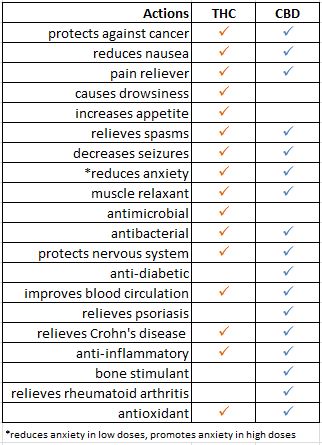
Notably (empirical data on distinct aspects of cannabis use are lacking in selected underrepresented countries), geographical regions, and minority groups. Being traditionally used for religious and ritualistic purposes — today cannabis use is interwoven with, and influenced by, social, legal, economic, and cultural environments which often differ across countries and cultures. Specifically (we aimed to overview historical and traditional contexts of cannabis use and physical and mental health-related correlates), as well as emerging cannabis-related policies and their impacts on medicinal and recreational use of cannabis. He hoped that studying the effects of cannabis on the mind would help him to elucidate the mechanisms of madness and delusions. Jacques-Joseph Moreau de Tours (a disciple of Esquirol), traveled through the Middle East between 1836 and 1840, accompanying one of his mentor’s patients.
In these ancient texts (cannabis), referred to as “bhang,” was viewed as a divine gift, employed to promote meditation and connect with elevated states of consciousness. This manuscript provides a concise overview of the cultural dimensions of cannabis use across various cultures (nations), genders, and ethnic groups, as well as the historical and traditional reasons behind the use of cannabis. This perspective proposes that cultural variations in the expression of Cannabis Use Disorder (CUD) might be influenced by differences in culture that pertain to specific neural mechanisms, which could subsequently affect the psychopathological manifestations of cannabis consumption.